What is a USB 2.0 cable?
Table des matières

- What is a USB 2.0 cable?
- Does USB 2.0 and 3.0 use the same cable?
- How do I know if I have a USB 2.0 cable?
- What is the difference between USB 3.0 and 2.0 cables?
- What is USB 2.0 look like?
- Can USB 2.0 convert to HDMI?
- Is USB 2.0 still good?
- What happens if you plug a USB 2.0 into a USB 3.0 port?
- Are all USB cables the same?
- How long can USB 2.0 cable get?
- What does 2.0 in an USB mean?
- Is USB 2.0 and 3.0 Fully compatible?
What is a USB 2.0 cable?
USB 2.0 is a Universal Serial Bus (USB) standard. Almost all devices with USB capabilities, and nearly all USB cables, support at least USB 2.0. Devices that adhere to the USB 2.0 standard have the ability to transmit data at a maximum speed of 480 Mbps. ... USB 2.0 is often referred to as Hi-Speed USB.
Does USB 2.0 and 3.0 use the same cable?
The A connectors still work properly so any 2.0 device with a 2.0 cable can be used with 3.0 ports or hubs. To sum up: USB 3.0 devices require 3.0 cables. ... USB 2.0 cables can be used with 3.0 ports but the transfer rate will fall back to 2.0.
How do I know if I have a USB 2.0 cable?
Use the Device Manager to determine if your computer has USB 1.1, 2.0, or 3.0 ports:
- Open the Device Manager.
- In the "Device Manager" window, click the + (plus sign) next to Universal Serial Bus controllers. You will see a list of the USB ports installed on your computer.
What is the difference between USB 3.0 and 2.0 cables?
When it comes to cables, USB 3.0 has a faster transfer rate (4.8 Gbps) and power transfer (900 mA) than USB 2.0. It doubles the number of wires in the cable from four to eight, making power transfer a lot better than USB 2.0.
What is USB 2.0 look like?
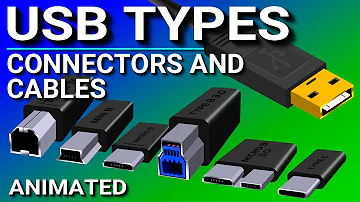
Different Appearance. You can generally tell the difference between USB 1.0, 2.0, and 3.0 by color alone. While the size and shape may be identical, the key is to look at the color of the plastic inside the device. The USB 1.0 features a white plastic color, while USB 2.0 is black, and the USB 3.0 is blue.
Can USB 2.0 convert to HDMI?
With Windows and Mac compatibility, the MANHATTAN USB 2.0 to HDMI Adapter requires no complicated configuration to convert and deliver digital content stored on desktop and notebook computers to other devices with HDMI input capabilities.
Is USB 2.0 still good?
USB 2.0 is sufficient for most data transfer tasks and is still likely better at data transfer than through Bluetooth. USB 3.0 is better for portable mass storage devices like back up hard drives.
What happens if you plug a USB 2.0 into a USB 3.0 port?
Is USB 3.0 backwards compatible? ... You can plug a USB 2.0 device into a USB 3.0 port and it will always work, but it will only run at the speed of the USB 2.0 technology. So, if you plug a USB 3.0 flash drive into a USB 2.0 port, it would only run as quickly as the USB 2.0 port can transfer data and vice versa.
Are all USB cables the same?
The answer is yes. As long as they are of the same type, ie. Type-A, Micro, Mini, Type-C, etc., they will fit into the same respective USB type port. ... Since the cable will only connect its respective type USB port, other type USB cables will not work in its place, and so you should hold on to it.
How long can USB 2.0 cable get?
- Maximum length of USB 2.0 cable: The 2.0 specification limits the length of a cable between USB 2.0 devices (Full Speed or Hi-Speed) to 5 meters (or about 16 feet and 5 inches).
What does 2.0 in an USB mean?
- Universal Serial Bus (USB) 2.0 is an external interface used on computers and other digital devices to transfer data through a cable. The designation "2.0" refers to the standard or version of the interface and it was released in 2000. While USB 3.0 was made standard in 2008, it is backward compatible with older versions.
Is USB 2.0 and 3.0 Fully compatible?
- USB 3.0 is compatible with USB 2.0. However, the USB 3.0 product will perform at the same level as a USB 2.0 product, so speed and power benefits will not be fully realized. USB 3.0 receptacles are electrically compatible with USB Standard 2.0 device plugs if they physically match.