How does CRISPR 9 work?

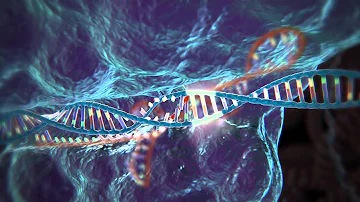
How does CRISPR 9 work?
CRISPR/Cas9 in its original form is a homing device (the CRISPR part) that guides molecular scissors (the Cas9 enzyme) to a target section of DNA. Together, they work as a genetic-engineering cruise missile that disables or repairs a gene, or inserts something new where the Cas9 scissors has made some cuts.
What can CRISPR-Cas9 treat?
Researchers are developing CRISPR-Cas9 therapies for a wide range of diseases, including inherited eye diseases, neurodegenerative conditions such as Alzheimer's and Huntington's disorders, and non-inherited diseases such as cancer and HIV. In fact, CRISPR human trials are already underway for many of these diseases.
Is CRISPR-Cas9 expensive?
But it can take months to design a single, customized protein at a cost of more than $1,000. With CRISPR, scientists can create a short RNA template in just a few days using free software and a DNA starter kit that costs $65 plus shipping.
Why is CRISPR-Cas9 important?
CRISPR is important because it allows scientists to rewrite the genetic code in almost any organism. It is simpler, cheaper, and more precise than previous gene editing techniques. Moreover, it has a range of real-world applications, including curing genetic disease and creating drought-resistant crops.
How do you explain CRISPR to a child?
CRISPR is a term used in microbiology. It stands for Clustered Regularly-Interspaced Short Palindromic Repeats. These are a natural segment of the genetic code found in prokaryotes: most bacteria and archaea have it. CRISPR has a lot of short repeated sequences.
How does CRISPR work for dummies?
0:101:39CRISPR Explained - YouTubeYouTube
Is CRISPR safe for humans?
Immune cells whose genomes have been altered with CRISPR are well-tolerated by three people with cancer. Preliminary results from one of the earliest clinical trials of CRISPR—Cas9 provide evidence that the technique is safe and feasible to use for treating human diseases.
Can CRISPR be used on humans?
Researchers conducted the first experiments using CRISPR to edit human embryos in 2015. Since then, a handful of teams around the world have begun to explore the process, which aims to make precise edits to genes. But such studies are still rare and are generally strictly regulated.
Who funds CRISPR?
Funds at Cathie Wood's Ark Investment Management snatched up shares of the biotech company and another gene-editing peer Intellia Therapeutics Inc. ahead of Crispr's results. ARK Investment Management is a top holder in Crispr, Intellia and Editas Medicine Inc., all of which use gene-editing technology known as Crispr.
Who will pay for CRISPR?
Boston-based Vertex will pay CRISPR $900 million upfront with a potential for $200 million in milestone payments if the therapy is approved. Vertex will be responsible for 60% of the program costs and receive the same in profits from future worldwide sales of CTX001.