What is the meaning of Lean Six Sigma?
Table des matières

- What is the meaning of Lean Six Sigma?
- What are the 5 principles of Lean Six Sigma?
- What is lean Sigma quality?
- Is lean and Six Sigma the same?
- What are the 8 Wastes of Lean?
- Who uses Six Sigma?
- What are the 6 Sigma tools?
- What are the 6 points of Six Sigma?
- What are the Six Sigma levels?
- Is Lean Six Sigma difficult?
- What is the difference between lean and Six Sigma?
- How does lean and Six Sigma work together?
- What are the 5 phases of Lean Six Sigma?
- What is Lean Six Sigma and why is it important?
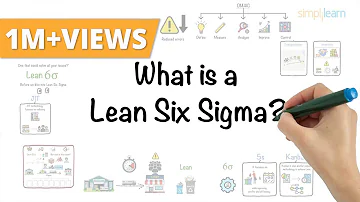
What is the meaning of Lean Six Sigma?
Lean Six Sigma is a team-focused managerial approach that seeks to improve performance by eliminating waste and defects. ... Simply put, under the tenets of Lean Six Sigma any use of resources that doesn't create value for the end customer is considered a waste and should be eliminated.
What are the 5 principles of Lean Six Sigma?
5 Lean Six Sigma Principles
- Work for the customer. The primary goal of any change you want to implement should be to deliver maximum benefit to the customer. ...
- Find your problem and focus on it. ...
- Remove variation and bottlenecks. ...
- Communicate clearly and train team members. ...
- Be flexible and responsive.
What is lean Sigma quality?
Six Sigma is a quality management methodology used to help businesses improve current processes, products or services by discovering and eliminating defects. The goal is to streamline quality control in manufacturing or business processes so there is little to no variance throughout.
Is lean and Six Sigma the same?
Lean is about eliminating wastes, taking time out of processes, and create better flow. ... From Improvement perspective, Six Sigma reduces variation and Lean reduces waste. Six Sigma aims at a process performance of 3.4 Defects per Million opportunity and Lean focuses on improving speed.
What are the 8 Wastes of Lean?
The 8 wastes of lean manufacturing include:
- Defects. Defects impact time, money, resources and customer satisfaction. ...
- Excess Processing. Excess processing is a sign of a poorly designed process. ...
- Overproduction. ...
- Waiting. ...
- Inventory. ...
- Transportation. ...
- Motion. ...
- Non-Utilized Talent.
Who uses Six Sigma?
In the early 2000s, Lean was added to Six Sigma to form Lean Six Sigma. This new approach is now used worldwide in industries such as manufacturing, finance, healthcare, IT, and the military. Six Sigma greatly refines processes, producing only 3.4 defects per million (DPMO).
What are the 6 Sigma tools?
Six Sigma Topics
- Continuous Improvement.
- Culture of Quality.
- Lean.
- Process Management.
- Root Cause Analysis (RCA)
- Statistics.
- Value Stream Mapping (VSM)
What are the 6 points of Six Sigma?
The Six Sigma DMADV process (define, measure, analyze, design, verify) is an improvement system used to develop new processes or products at Six Sigma quality levels.
What are the Six Sigma levels?
There are various six sigma certification levels, including, White Belt, Yellow Belt, Green Belt, Black Belt, and Master Black Belt.
Is Lean Six Sigma difficult?
The ASQ Six Sigma Black Belt examination is a rigorous and difficult exam. It requires disciplined study, experience, and a sound preparation and test-taking strategy. Many people study for months and still fail.
What is the difference between lean and Six Sigma?
- The following are the major differences between lean and six sigma Lean is defined as a systematic way of banishing waste from the systems of organization. The main concept of lean thinking is the removal of waste while six sigma is centered towards the elimination of variation in the processes.
How does lean and Six Sigma work together?
- Lean six sigma combines both lean and six sigma methodologies together, in order to eliminate waste and improve upon processes. This can be done through reducing waste caused by transportation, inventory, motion, waiting, overproduction and over-processing, as well as minimizing defects in manufactured products.
What are the 5 phases of Lean Six Sigma?
- Lean Six Sigma is simply a process for solving a problem. It consists of five basic phases: Define, Measure, Analyze, Improve, and Control.
What is Lean Six Sigma and why is it important?
- Six Sigma is important because it scores much higher over other quality improvement techniques such as TQM . Business organizations employing TQM just focus on achieving predetermined quality levels, which certainly improves efficiencies but does not allow the organization to realize the full potential.