What is meant by big data?
Table des matières

- What is meant by big data?
- What is an example of big data?
- What are the 3 types of big data?
- What is big data and how is it used?
- What type of data is big data?
- What are the 5 characteristics of big data?
- What can you do with big data?
- What are the advantages of big data?
- What are the 4 Vs of big data?
- What is the importance of big data?
- What is big data and what does it mean?
- What is big data and how is it used?
- What exactly is the concept of big data?
- What is big data and its importance?
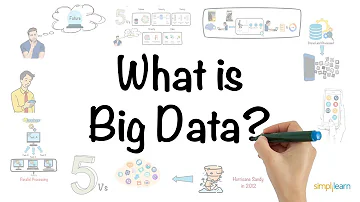
What is meant by big data?
The definition of big data is data that contains greater variety, arriving in increasing volumes and with more velocity. ... Put simply, big data is larger, more complex data sets, especially from new data sources. These data sets are so voluminous that traditional data processing software just can't manage them.
What is an example of big data?
Industry-specific Big Data Challenges Since consumers expect rich media on-demand in different formats and a variety of devices, some Big Data challenges in the communications, media, and entertainment industry include: Collecting, analyzing, and utilizing consumer insights. Leveraging mobile and social media content.
What are the 3 types of big data?
Big data is classified in three ways:
- Structured Data.
- Unstructured Data.
- Semi-Structured Data.
What is big data and how is it used?
Big data is the set of technologies created to store, analyse and manage this bulk data, a macro-tool created to identify patterns in the chaos of this explosion in information in order to design smart solutions. Today it is used in areas as diverse as medicine, agriculture, gambling and environmental protection.
What type of data is big data?
Variety of Big Data refers to structured, unstructured, and semistructured data that is gathered from multiple sources. While in the past, data could only be collected from spreadsheets and databases, today data comes in an array of forms such as emails, PDFs, photos, videos, audios, SM posts, and so much more.
What are the 5 characteristics of big data?
The 5 V's of big data (velocity, volume, value, variety and veracity) are the five main and innate characteristics of big data.
What can you do with big data?
5 Practical Uses of Big Data:
- Location Tracking: Logistic companies have been using location analytics to track and report orders for quite some time. ...
- Precision Medicine: With big data, hospitals can improve the level of patient care they provide. ...
- Fraud Detection & Handling: ...
- Advertising: ...
- 5. Entertainment & Media:
What are the advantages of big data?
7 Benefits of Using Big Data
- Using big data cuts your costs. ...
- Using big data increases your efficiency. ...
- Using big data improves your pricing. ...
- You can compete with big businesses. ...
- Allows you to focus on local preferences. ...
- Using big data helps you increase sales and loyalty.
- Using big data ensures you hire the right employees.
What are the 4 Vs of big data?
The 4 V's of Big Data in infographics IBM data scientists break big data into four dimensions: volume, variety, velocity and veracity. This infographic explains and gives examples of each.
What is the importance of big data?
Big Data helps companies to generate valuable insights. Companies use Big Data to refine their marketing campaigns and techniques. Companies use it in machine learning projects to train machines, predictive modeling, and other advanced analytics applications. We can't equate big data to any specific data volume.
What is big data and what does it mean?
- Big data is an evolving term that describes any voluminous amount of structured, semistructured and unstructured data that has the potential to be mined for information.
What is big data and how is it used?
- Big data refers to a process that is used when traditional data mining and handling techniques cannot uncover the insights and meaning of the underlying data. Data that is unstructured or time sensitive or simply very large cannot be processed by relational database engines.
What exactly is the concept of big data?
- Summary Big Data definition : Big Data is defined as data that is huge in size. ... Big Data analytics examples includes stock exchanges, social media sites, jet engines, etc. Big Data could be 1) Structured, 2) Unstructured, 3) Semi-structured Volume, Variety, Velocity, and Variability are few Big Data characteristics
What is big data and its importance?
- Big Data analytics provides organizations an opportunity for disruptive change and growth. In most cases, however, the data sets are too large, move too fast or are too complex for the traditional computing environment, which creates a significant challenge.