Pourquoi on dit IPN ?

Pourquoi on dit IPN ?
La poutre IPN, acronyme de « Profilé en I à Profil normal » et la poutre IPE, ou « poutrelle à Profil européen », sont des incontournables dans les travaux de construction en acier. Les poutrelles IPN sont aussi connues sous une dénomination plus longue : poutre en forme de I, à ailes inclinées et laminées à chaud.
Quelle IPN utilisé pour mur porteur ?
Le calcul d'un IPN de mur porteur est très simple ! ... La section du mur : minimum 50 cm de large. Pour les murs épais on peut mettre 2 voire 3 IPN ; La largeur de l'ouverture : si vous réalisez une porte de ~80 cm de large, vous risquez de vous retrouver avec un gros IPN !
Quel sens IPN ?
Les initiales IPN signifient : profilé en « I », à Profil Normal. Une poutrelle IPN s'utilise lors de travaux de construction ou de rénovation, à la verticale mais aussi à l'horizontale. Son but est de soutenir la structure du bâtiment en renforçant un mur porteur ou un plancher.
Comment calculer UPN ?
Détermination par le calcul Exemple : Générateur PN (E, r) Conducteur ohmique AB (R) UPN = E – r I UAB = R I selon la loi d'Ohm La tension délivrée par le générateur est égale à la tension aux bornes du conducteur ohmique : UPN = UAB Il faut isoler I pour pouvoir le calculer : E – r I = R I E = R I + r I = I (R + r) I ...
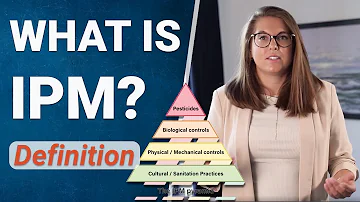
What is integrated pest management (IPM)?
- Integrated Pest Management (IPM) is an effective and environmentally sensitive approach to pest management that relies on a combination of common-sense practices. IPM programs use current, comprehensive information on the life cycles of pests and their interaction with the environment.
What is ipipm doing?
- IPM led Midtronics, a global battery management technology company, in the search and implementation of a new ERP system, enhancing their business processes during a period of extreme growth—with zero disruption to sales.
What are the components of an IPM program?
- While each situation is different, six major components are common to all IPM programs: Pest identification. Monitoring and assessing pest numbers and damage. Guidelines for when management action is needed. Preventing pest problems. Using a combination of biological, cultural, physical/mechanical and chemical management tools.
What is chemical control in IPM?
- Chemical control Chemical control is the use of pesticides. In IPM, pesticides are used only when needed and in combination with other approaches for more effective, long-term control. Pesticides are selected and applied in a way that minimizes their possible harm to people, nontarget organisms, and the environment.