Can you go on Eurotunnel without a car?
Table des matières

- Can you go on Eurotunnel without a car?
- Can you drive a car through the Eurotunnel?
- Is the ferry or Eurotunnel cheaper?
- What is the difference between Eurotunnel and Eurostar?
- How long does the Chunnel take?
- How far underwater is the Eurotunnel?
- Does the Chunnel go to Paris?
- How long is a boat ride from London to France?
- When was Chunnel built?
- Is there a bridge from England to France?
- How long is the Euro Tunnel?
- How deep is the Eurotunnel?
- How long to travel through the Channel Tunnel?
- When was Eurotunnel built?
Can you go on Eurotunnel without a car?
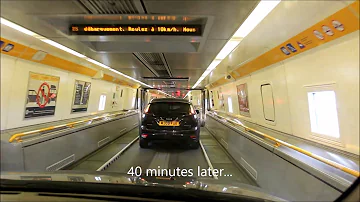
At Eurotunnel we can only allow you to travel in a vehicle – be that your own or as part of a coach trip. You cannot travel as a foot passenger, but you are able to take a bicycle. If you don't need or want to drive your vehicle for your trip, you can travel as a foot passenger on Eurostar.
Can you drive a car through the Eurotunnel?
It is not possible to drive a car or motorcycle through the Channel Tunnel. Instead, motorists must drive onto the Eurotunnel Le Shuttle train, which boards at the Channel Tunnel terminals in Folkestone and Calais.
Is the ferry or Eurotunnel cheaper?
Crossing the channel in your car, whether with a caravan or not, is a choice between the Eurotunnel and a ferry. ... Although we have found in previous years that usually the ferry is cheaper than Eurotunnel, the quicker crossing with Eurotunnel generally outweighs the cost saving of the ferry.
What is the difference between Eurotunnel and Eurostar?
Eurotunnel Le Shuttle carries freight and all forms of vehicles, including cars, motorbikes, campervans, caravans, coaches and lorries. You cannot travel as a foot passenger on Eurotunnel, but you are able to take a bicycle. Eurostar trains are for foot passengers only.
How long does the Chunnel take?
approximately 35 minutes The Chunnel tunnel is 31.3 miles (50.56 km) in length and it takes a Eurostar train approximately 35 minutes to travel its full length. In total, the fastest journey time from London St. Pancras to Paris Gare du Nord is 2 hours and 29 minutes.
How far underwater is the Eurotunnel?
The Channel Tunnel is the longest undersea tunnel in the world: its section under the sea is 38km long. It is actually composed of three tunnels, each 50km long, bored at an average 40m below the sea bed. They link Folkestone (Kent) to Coquelles (Pas-de-Calais).
Does the Chunnel go to Paris?
Yes. Trains from London to Paris do go underwater. ... At a maximum speed of 100 mph (160 km/h) in the Chunnel, it takes a Eurostar train around 35 minutes to travel this underwater stretch between London and Paris.
How long is a boat ride from London to France?
Brittany Ferries is the most popular company, offering trips from Portsmouth, England, to Le Havre, France, that take about four hours.
When was Chunnel built?
1988 Tunnel sous la Manche/Début de la construction When was the Chunnel built? The idea of a tunnel under the Channel was first proposed in 1802 but construction wasn't started until 1988. It was completed in 1993, and Eurostar services started in November 1994.
Is there a bridge from England to France?
The Channel Tunnel (or Chunnel) (French: le tunnel sous la Manche) is a long underwater tunnel between England and France that runs under the English Channel at the Strait of Dover. ... It connects Folkestone, Kent in the United Kingdom to Calais in northern France.
How long is the Euro Tunnel?
- The Euro Tunnel connects the U.K. and France with a capacity of 600 trains each way per day. The length of the tunnel is 50 km, including 39 km of which is underwater. The structure consists of two railway tunnels and a service tunnel.
How deep is the Eurotunnel?
- At 37.9 kilometres (23.5 mi), the tunnel has the longest undersea portion of any tunnel in the world, although the Seikan Tunnel in Japan is both longer overall at 53.85 kilometres (33.46 mi) and deeper at 240 metres (790 ft) below sea level.
How long to travel through the Channel Tunnel?
- It takes a total of 35 minutes to travel across the Channel Tunnel, from terminal to terminal. The "running tunnels," the two tunnels on which the trains run, are 24-feet in diameter. The northern running tunnel carries passengers from England to France.
When was Eurotunnel built?
- An early attempt at building a Channel Tunnel was made in the late 19th century, on the English side "in the hope of forcing the hand of the English Government". The eventual successful project, organised by Eurotunnel, began construction in 1988 and opened in 1994.