Who defeated Napoleon at Waterloo?
Table des matières

- Who defeated Napoleon at Waterloo?
- Why did Napoleon lose the Battle of Waterloo?
- What did Napoleon say about the Battle of Waterloo?
- Why did Napoleon split his forces at Waterloo?
- Why did Napoleon get exiled?
- What British regiments fought at Waterloo?
- Why was Napoleon so successful?
- What really happened at Waterloo?
- What happened to the dead after the Battle of Waterloo?
- What did Napoleon do in Elba?
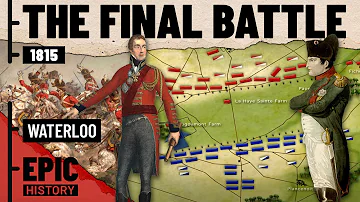
Who defeated Napoleon at Waterloo?
the Duke of Wellington At Waterloo in Belgium, Napoleon Bonaparte suffers defeat at the hands of the Duke of Wellington, bringing an end to the Napoleonic era of European history. The Corsica-born Napoleon, one of the greatest military strategists in history, rapidly rose in the ranks of the French Revolutionary Army during the late 1790s.
Why did Napoleon lose the Battle of Waterloo?
The adverse environmental conditions, the weak state of his army, the incompetence of his officers, and the superior tactics of his enemies all forced Napoleon to wage war from a disadvantageous position and eventually led to his demise.
What did Napoleon say about the Battle of Waterloo?
“My regrets are not for myself but for unhappy France! With twenty thousand men less than I had we ought to have won the battle of Waterloo. But it was Fate that made me lose it.
Why did Napoleon split his forces at Waterloo?
Napoleon split his forces into three main armies; first, he placed an army in the south near the alps. This army was to stop Austrian advances in Italy. Second, there was an army on the French/Prussian border where he hoped to defeat any Prussians attacks.
Why did Napoleon get exiled?
In 1814, Napoleon's broken forces gave up and Napoleon offered to step down in favor of his son. When this offer was rejected, he abdicated and was sent to Elba. ... Napoleon's defeat ultimately signaled the end of France's domination of Europe.
What British regiments fought at Waterloo?
Regiments
- 1st Life Guards now the Life Guards.
- 2nd Life Guards now the Life Guards.
- Royal Horse Guards now the Blues and Royals.
- King's Dragoon Guards now the Queen's Dragoon Guards.
- Royal Dragoons now the Blues and Royals.
- Royal Scots Greys now the Royal Scots Dragoon Guards.
Why was Napoleon so successful?
His strong rapport with his troops, his organizational talents, and his creativity all played significant roles. However, the secret to Napoleon's success was his ability to focus on a single objective. On the battlefield, Napoleon would concentrate his forces to deliver a decisive blow.
What really happened at Waterloo?
Napoleon rose through the ranks of the French army during the French Revolution, seized control of the French government in 1799 and became emperor in 1804. ... The Battle of Waterloo, in which Napoleon's forces were defeated by the British and Prussians, marked the end of his reign and of France's domination in Europe.
What happened to the dead after the Battle of Waterloo?
After Waterloo, the bones of the dead — Wellington's Britons and Napoleon's French and Blücher's Prussians — were freighted back to Hull to use as fertiliser for England's green and pleasant land, military mulch from the 1815 battlefields which also yielded fresh teeth to be reused as dentures for the living.
What did Napoleon do in Elba?
In his 300 days as Elba's ruler, Napoleon ordered and oversaw massive infrastructure improvements: building roads and draining marshes, boosting agriculture and developing mines, as well as overhauling the island's schools and its entire legal system.