Comment sont organisées les éléments du tableau Guernica ?
Table des matières

- Comment sont organisées les éléments du tableau Guernica ?
- Quelle est la technique du tableau Guernica ?
- Quels sont les symboles du tableau Guernica ?
- Où se trouve Guernica aujourd'hui ?
- Pourquoi il y a eu un bombardement à Guernica ?
- Pourquoi Guernica a été créé ?
- What is the composition and interpretation of Guernica?
- When did Pablo Picasso paint Guernica?
- What do we find no solace in in Guernica?
- How many animals are in the painting Guernica?
Comment sont organisées les éléments du tableau Guernica ?
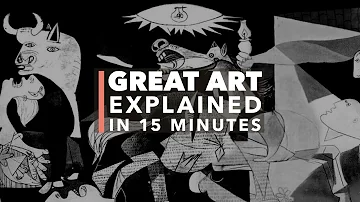
La toile nous montre un ensemble de personnages et d'animaux dans un espace fermé. Organisé comme une frise, Guernica peut être décrit de gauche à droite : Une femme tient son enfant dans ses bras, la tête rejetée en arrière, derrière elle un taureau et un oiseau. Au premier plan à gauche gît un soldat.
Quelle est la technique du tableau Guernica ?
Caractéristiques techniques Guernica est une peinture d'une taille monumentale (349,,6 cm ). C'est une peinture d'histoire, exécutée en noir et blanc, avec un camaïeu de nuances de gris (grisaille). ... Guernica est une peinture de style cubiste et expressionniste qui utilise notamment le clair-obscur.
Quels sont les symboles du tableau Guernica ?
Le taureau à gauche est l'incarnation de la brutalité, de l'obscurité dans la corrida. Dans ce tableau, il représente les Nationalistes dans cette guerre. Le cheval, quant à lui, incarne la victime innocente de cette corrida. Les différentes figures de l'animal traduisent la terreur, la douleur.
Où se trouve Guernica aujourd'hui ?
Le tableau reste au musée Reina Sofia de Madrid où il est installé depuis 1992.
Pourquoi il y a eu un bombardement à Guernica ?
Ce massacre a été voulu par Hitler, allié du général Franco dans la guerre civile espagnole, pour terroriser la population civile.
Pourquoi Guernica a été créé ?
La guerre civile espagnole en peinture En 1937, Pablo Picasso, qui vit à Paris, reçoit une demande de la République espagnole : créer une œuvre pour représenter l'Espagne lors de l'Exposition Universelle de Paris.
What is the composition and interpretation of Guernica?
- Composition and Interpretation. Replete with symbolism, Guernica is a massive work, measuring 3.5 metres (11.5 feet) high, and 7.8 metres (25.5 feet) wide. Although packed with anguished imagery showing the suffering of both people and animals, it is painted in monochrome, using a palette of grey, black, and white.
When did Pablo Picasso paint Guernica?
- Pablo Picasso – Guernica, 1937, oil painting on canvas, 3.49×7.77m, Museo Reina Sofía, Madrid, Spain. Guernica is one of Pablo Picasso’s most famous works. This mural-sized oil painting on canvas was done in 1937.
What do we find no solace in in Guernica?
- In Guernica we find no solace in humanity—all is death and destruction. Picasso painted Guernica over the course of just 35 days, a stunning achievement for such a large work, especially one that has made such a mark in history.
How many animals are in the painting Guernica?
- Analysing the iconography in the painting, one Guernica scholar, Anthony Blunt, divides the protagonists of the pyramidal composition into two groups, the first of which is made up of three animals; the bull, the wounded horse and the winged bird that can just be made out in the background on the left.